Vertical Film School presents

The Vertical
Showrunner

Write it. Direct it. Generate it. Ship it.

A live six-week production program for creators who want to build and release vertical drama with AI.
Stop learning isolated tools. Learn to run the whole show.
30 seatsCohort 1 dates announced soon.
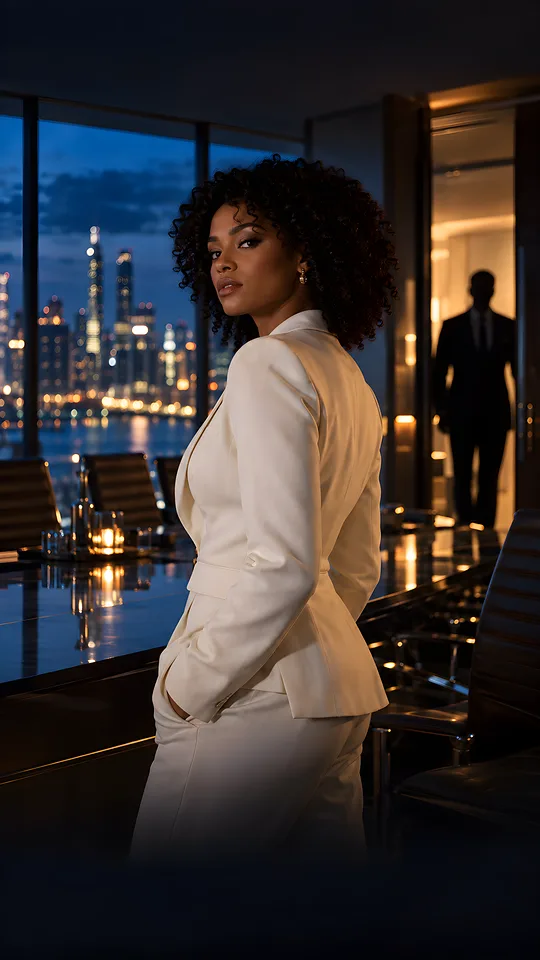
A frame from a fictional vertical drama: a woman in an ivory suit looks back at the camera in a night-lit boardroom, a silhouette in the doorway
Episode 1 · The Boardroom

Writer

Create stories that keep people watching.

Director

Turn words into performance and emotion.

AI Generator

Bring your direction to life using modern production tools.

Ship

Finish and release the show.

The category

Become the creator a vertical studio can build a show around.

Production teams are getting smaller, and creators are increasingly expected to move across disciplines. The person who can take an idea from a blank page to a finished screen is the person a show can be built around.

Vertical is where that demand is today: brands, companies, producers and production studios all need vertical content, and AI lets one person deliver it at a speed and price they will pay.

The craft travels. A hook, a cliffhanger, a character who looks the same in every shot: none of it cares about the shape of the frame.

A vertical frame fits inside a widescreen one. The craft is the same. Only the frame changes.
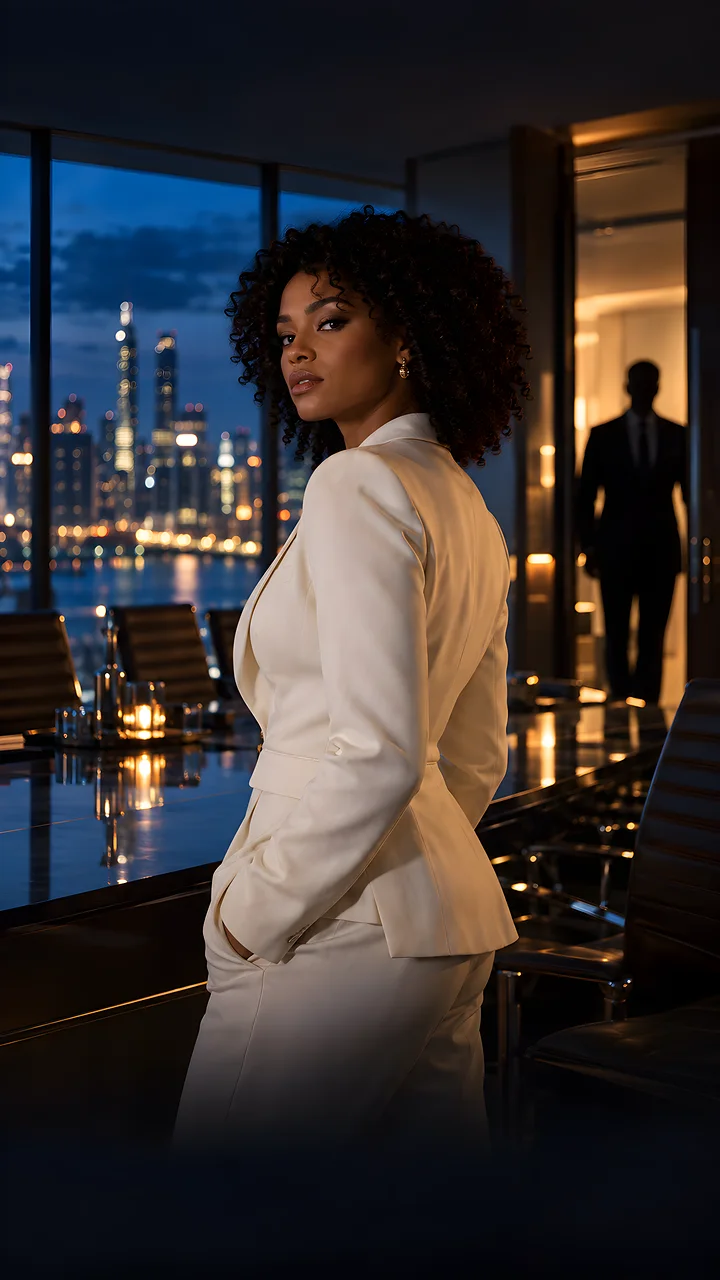
A still from a fictional vertical drama: a woman in an ivory suit looks back at the camera in a night-lit boardroom
The Vertical Showrunner Method

One method. Four stages.

01Write Story, characters, hooks, episodes.
02Direct Performance, composition, pacing, visual language.
03Generate Characters, locations, footage, voice, sound.
04Ship.Editing, packaging, publishing, distribution.

This is not an AI tool course.

Today’s breakthrough model is tomorrow’s menu option.

The program teaches a production workflow, not dependence on one piece of software. We use modern tools every week. What lasts is everything around them.

  • Story
  • Taste
  • Direction
  • Production judgment
  • Continuity
  • Workflow
  • Finishing
The program

Six weeks. One show.

Go from idea to audience.

WEEK 01

Build the Show

Concept. Audience. Genre. Story engine. Season architecture.

You leave withSeries premise, logline, audience, genre, hook, season concept and episode engine.

WEEK 02

Build the World

Characters. Locations. Visual style. AI continuity.

You leave withA production bible that keeps your world coherent across every episode.

WEEK 03

Write for Vertical

Hooks. Episode structure. Cliffhangers. Scripts.

You leave withSeason arc, episode map, production-ready scripts and a repeatable writing system.

WEEK 04

Direct AI

Shot design. Performance. Composition. AI direction.

You leave withShot plans, scene direction, production prompts and a finished Episode 1.

WEEK 05

Build the Production Line

Generation. Editing. Sound. Quality control.

You leave withA repeatable AI production workflow, with your remaining episodes locked.

WEEK 06

Ship the Show

Distribution. Portfolio. Trailer. Demo Day.

You leave withA released or release-ready series package, and proof you can take a vertical drama from concept to audience.

Curriculum

Week by week.

Open a week to see lessons, the live session and the assignment.

WEEK 01Build the Show

Start with something worth making. By Friday you can say what the show is, who it is for, why anyone watches the next episode, and why this story belongs in vertical.

  1. Why vertical is written differently
  2. Your audience and your lane
  3. Heat and violence levels
  4. The one-sentence premise
  5. The story engine
  6. Season concept and episode engine
  7. Why this story belongs in vertical
Live session
Three hit verticals broken down shot by shot.
Assignment
Premise, logline, audience, genre, hook, season concept.
Deliverable
Series premise, logline, audience, genre, hook, season concept and episode engine.
WEEK 02Build the World

AI gives you freedom and one new problem: consistency. Your lead cannot look 24 in one shot and 47 in the next. This week you build the bible that prevents it.

  1. The consistency problem
  2. The character bible, written for AI casting
  3. Character lock
  4. The environment library
  5. Voice lock
  6. The visual bible
  7. The continuity system
Live session
Consistency workshop. Bring your drifting character and we fix it live.
Assignment
Character bible, locked cast, environment library, visual bible, continuity document.
Deliverable
A production bible that keeps your world coherent across every episode.
WEEK 03Write for Vertical

Vertical drama is not television squeezed onto a phone. Episodes are shorter, the opening matters more and the cliffhanger carries the weight.

  1. Script format for vertical
  2. Hooks and the first three seconds
  3. Escalating conflict, reveals and reversals
  4. Cliffhanger engineering
  5. Writing for AI voices
  6. Writing for 9:16 and the cast you built
  7. Season arc and episode map
  8. The cold-read test
Live session
Table read, with script notes in front of the cohort.
Assignment
Season arc, episode map, scripts for Episodes 1 to 3.
Deliverable
Season arc, episode map, production-ready scripts and a repeatable writing system.
WEEK 04Direct AI

Prompting is not directing. A prompt produces an image. A director produces an intentional scene.

  1. The shot list for 9:16
  2. Prompting as directing
  3. From script line to approved shot
  4. The review loop
  5. Performance from a generated face
  6. Continuity across shots in one scene
Live session
The review loop, live on a cohort member’s Episode 1.
Assignment
Every shot of Episode 1 generated and approved.
Deliverable
Shot plans, scene direction, production prompts and a finished Episode 1.
WEEK 05Build the Production Line

Now you stop making isolated shots and start making a show. The goal is a system you can still use when the tools change.

  1. Generating the remaining episodes fast
  2. The vertical edit
  3. Dialogue, sound and music
  4. Captions as design
  5. Quality control and revision
  6. Thumbnails and cover frames
  7. The watch-through
Live session
Rough cut screenings with notes.
Assignment
All episodes locked. Three is the floor, five is the stretch.
Deliverable
A repeatable AI production workflow, with your remaining episodes locked.
WEEK 06Ship the Show

A finished episode nobody sees is still unfinished. You publish, cut a trailer, package the series and show the work on demo day.

  1. The platform map
  2. Publishing your episodes
  3. The trailer and promotional creative
  4. The distribution package and pitch kit
  5. Rights and licenses
  6. Demo day
Live session
Demo day.
Assignment
Published or release-ready series, trailer and portfolio.
Deliverable
A released or release-ready series package, and proof you can take a vertical drama from concept to audience.
The final project

Graduate with a real series.

Not another certificate in your Downloads folder. Proof that you can make the thing.

  • 01Series premise
  • 02Logline
  • 03Character bible
  • 04Visual world bible
  • 05Season arc
  • 06Episode map
  • 07Scripts
  • 08Three finished episodes
  • 09Trailer
  • 10Promotional creative
  • 11Distribution package
  • 12Creator portfolio
  • 13Writer, Director and AI Generator credits
After the final episode

Then put the work in front of people who hire.

A finished series only helps if the right people can find it. The Vertical Showrunner runs alongside Vertical Drama Jobs, a dedicated destination for jobs, collaborations and talent across vertical entertainment.

Your episodes, trailer and credits are built to be sent to someone hiring with two words: watch this.

WriterPremise, scripts, hooks
DirectorShots, performance, pacing
AI GeneratorCharacters, footage, voice
The Vertical Showrunner Production System

You don’t just get lessons.
You get the production system.

Working documents, not slide decks. Fourteen templates you use every week and keep after demo day.

01 / 14
Show Concept Canvas
02 / 14
Vertical Series Bible
03 / 14
Character Lock Sheet
04 / 14
Environment Library
05 / 14
Continuity Tracker
06 / 14
Episode Map
07 / 14
Vertical Script Template
08 / 14
Shot List
09 / 14
Generation Log
10 / 14
Approved Shot Tracker
11 / 14
Episode QC Checklist
12 / 14
Rights Checklist
13 / 14
Distribution Package
14 / 14
Creator Portfolio Template
How a week runs

This isn’t six weeks of watching videos.

Monday

Lesson pack opens.

Wednesday

Live build session.

Friday

Industry guest session, on selected weeks.

Sunday

Project milestone due.

Monday

Feedback.

Plan on 8 to 10 hours a week, heavier in Weeks 4 and 5 when you are generating. Live teaching is recorded and posts the same day. You keep access for 12 months.

Chi Odogwu seated on a light sofa
Your instructor

Chi Odogwu

Head of Partnerships at Vertical Drama Jobs. Host of the Vertical Film School podcast.

Chi works with the studios, platforms and creators hiring in vertical drama. He produced the Micro Drama Summit and hosts the Vertical Film School podcast, so he spends his week with the people who commission, cut and release these shows.

That is why the program ends where it does. Not at a certificate, and not at a pitch deck. It ends at a finished series that someone in that industry can press play on.

Who this is for

You don’t need to arrive as all three.

Filmmakers

Who see AI changing production and do not want to watch from the sideline.

Writers

Who want their own stories on screen, not in a drawer.

Directors

Who want to understand AI-native production from the inside.

AI creators

Who can generate impressive images and want to become better storytellers.

Producers

Exploring vertical entertainment and who need to know how the work gets made.

Microdrama creators

Who want a more complete skill set than one platform teaches.

This probably isn’t for you if…

  • You only want prompts.
  • You want passive videos to watch someday.
  • You won’t meet deadlines.
  • You don’t intend to produce anything.
Founding cohort

The first cohort is deliberately small.

That gives us room to work closely with the first group and build the program around real results. Founding members were there at the beginning, and later students are not.

  • Six weeks of live teaching, recorded
  • Industry guest sessions on selected weeks
  • Full lesson library, 12 months of access
  • Written feedback on every assignment
  • A private cohort of 30
  • The Vertical Showrunner Production System
  • Demo day with invited industry guests
  • Vertical Film School certificate of completion
Founding cohort
$1,297

Standard price after the founding cohort: $1,797

Seats30

Tools are not included in the price.

Questions

Before you ask.

Do I need AI experience?

No. Week 0 sets you up with one foundation model and one creation tool. Week 1 is story, where tools do not matter yet. By the end of Week 2 you are generating consistent characters.

Do I need filmmaking experience?

No. You do need a story you want to tell and the willingness to finish it. Writers, directors, editors and complete newcomers all start in the same place.

Which tools do I need?

One foundation model and one creation tool. In Week 0 we tell you exactly which two to buy, so you are not paying for five. The program teaches a workflow, so it still works when the tools change.

How much should I budget for tools?

Tools are not included in the price. You need one foundation model and one creation tool, and Week 0 names the two to buy so you are not paying for five.

What if I miss a live session?

Recordings post the same day and assignments work the same either way. Demo day is the one session we ask you to protect.

How much time should I expect each week?

Plan on 8 to 10 hours, heavier in Weeks 4 and 5 when you are generating.

What will I finish?

A vertical series package built around your own concept: premise, bibles, scripts, three finished episodes (five is a stretch goal), a trailer, promotional creative, a distribution package and a portfolio.

Do I own my project?

You own your bible, your scripts and your episodes. Week 6 covers each tool’s output license and each platform’s terms, so you know what you are agreeing to before you submit anywhere.

Are jobs guaranteed?

No, and no credible program should promise one. You leave with finished work that people hiring in vertical can watch, which is a stronger position than a claim on a resume.

When is the next cohort?

Cohort 1 is the founding cohort. Later cohorts open at the standard price.

Is this self-paced?

No. Weekly deadlines and live sessions are the point. You build your show while you are inside the program, with feedback every week.
Don’t wait for the job description to exist.

Creative industries rarely announce the new job before they start hiring for it. The role shows up first. The title comes later.

Become a Vertical Showrunner.
Write. Direct. Generate. Ship.

Presented by Vertical Film School.